


11.03.2026
Source: PN Prime News online - There's a replacement for diesel, but Basel's politicians are blind to it - Prime News
Gerspach AG supplies the municipal garden centre with HVO fuel. Nevertheless, it still has to sell functioning vehicles.
Not a single word was heard about alternatives to conventional diesel in the debate in the Grand Council at the beginning of February. Yet the deal to electrify the municipal garden centre's vehicle fleet involved potential savings of no less than CHF 5.1 million.
However, a red-green alliance with the GLP and parts of the centre in tow did not want to hear of the FDP's cost-cutting exercise for «ecological reasons». The reason given was that the Basel administration must be «absolutely climate-neutral» by 2030. And so the municipal garden centre now has to replace and sell functioning diesel vehicles with e-vehicles, even though the vehicles have not yet reached the end of their service life and could still be used for a few years (Read more here).
However, the fuel supplier Gerspach AG has now revealed to Prime News that the municipal garden centre has been refuelling its diesel vehicles at the Arlesheim site with HVO fuel since July 2025. The state-owned company confirmed this on request.
HVO stands for «Hydrotreated Vegetable Oils». Refineries produce HVO from fats and oils treated with hydrogen. With HVO fuel, diesel engines should run almost climate-neutrally. It is true that the combustion of HVO emits a similar amount of carbon dioxide as conventional diesel. However, as the fuel is based on renewable raw materials, it would be de facto CO2-neutral. HVO has a significantly better carbon footprint than fossil fuels.
According to experts, it is possible with HVO fuel to reduce CO2 emissions by up to 90 per cent compared to fossil diesel. Against this background, the voting behaviour of the Basel parliament must be questioned once again.
After all, the city garden centre's diesel vehicles could have been operated for several years longer and until the end of their lives with the «ecological» HVO fuel. On top of this, parliament could have saved the 5.1 million francs.
Thomas Scheurer has no sympathy for this additional expenditure. The managing director of Gerspach AG and his ten employees supply various fuels to private individuals and companies - and the alternative HVO to the municipal nursery.
«I find it incomprehensible when municipalities or cantons destroy the residual value of vehicles at the taxpayer's expense. If private individuals do this with their own earned capital, then that's something else,» says Scheurer.
According to Scheurer, the city nursery's HVO fuel is refined in Scandinavia. It consists of used vegetable oils and fats that are produced, for example, when frying French fries in the catering industry or during production in the food industry.
Scheurer: «Only HVO fuel based on used cooking oil may be imported into Switzerland.» The production of HVO fuel from freshly pressed rapeseed or sunflower oil is prohibited. «Fuels based on HVO must not compete with the production of food in this country.»
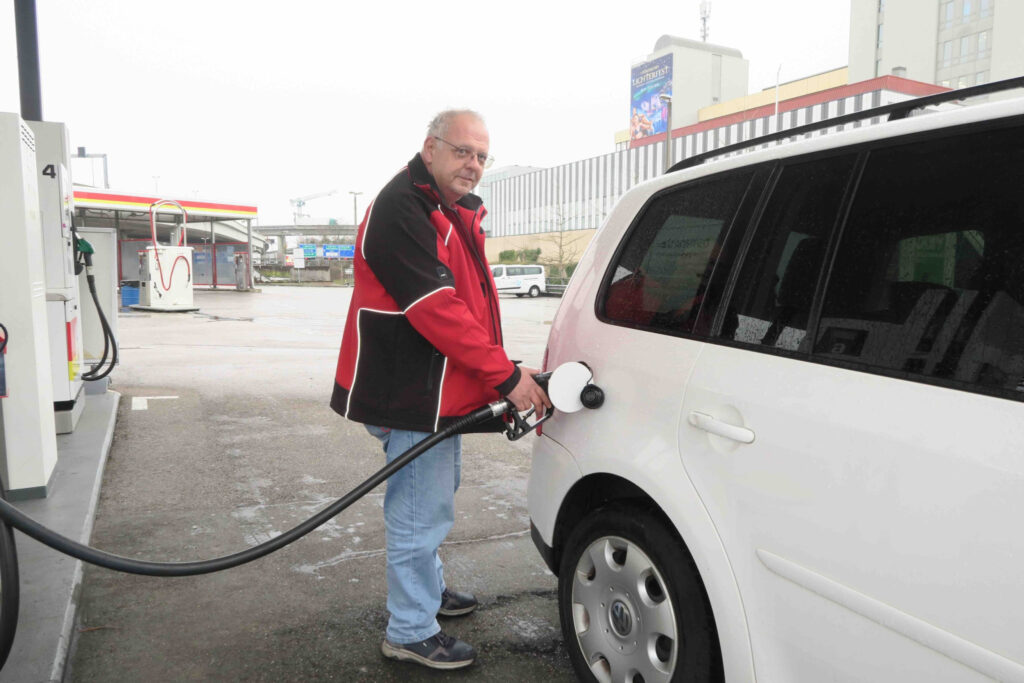
Technically, switching from conventional diesel to HVO is «no problem» according to Scheurer. HVO fuel can be mixed with diesel. Similarly, petrol station pumps would not need to be converted. «I've been refuelling my 14-year-old diesel car with HVO fuel for a good six months now. The engine runs with less odour, smoother and consumes about the same amount when driven moderately. That would also be no problem for the canton's diesel vehicles.»
Against this backdrop, Scheurer wonders why Basel's politicians don't let the administration's diesel vehicles that are still roadworthy continue to run on HVO fuel until the end of their lives - and then switch to electric drive. «Politicians are going and killing off the combustion engine. This is despite the fact that HVO fuel is a good alternative. Basel is thus refusing to be open to any technology.»
Prime News asked the city nursery, the Basel public transport company (BVB) and the Department of Justice and Security (JSD). What do these organisations think about HVO fuel? Is it conceivable and feasible for them to fill existing company petrol stations with this alternative instead of conventional diesel?
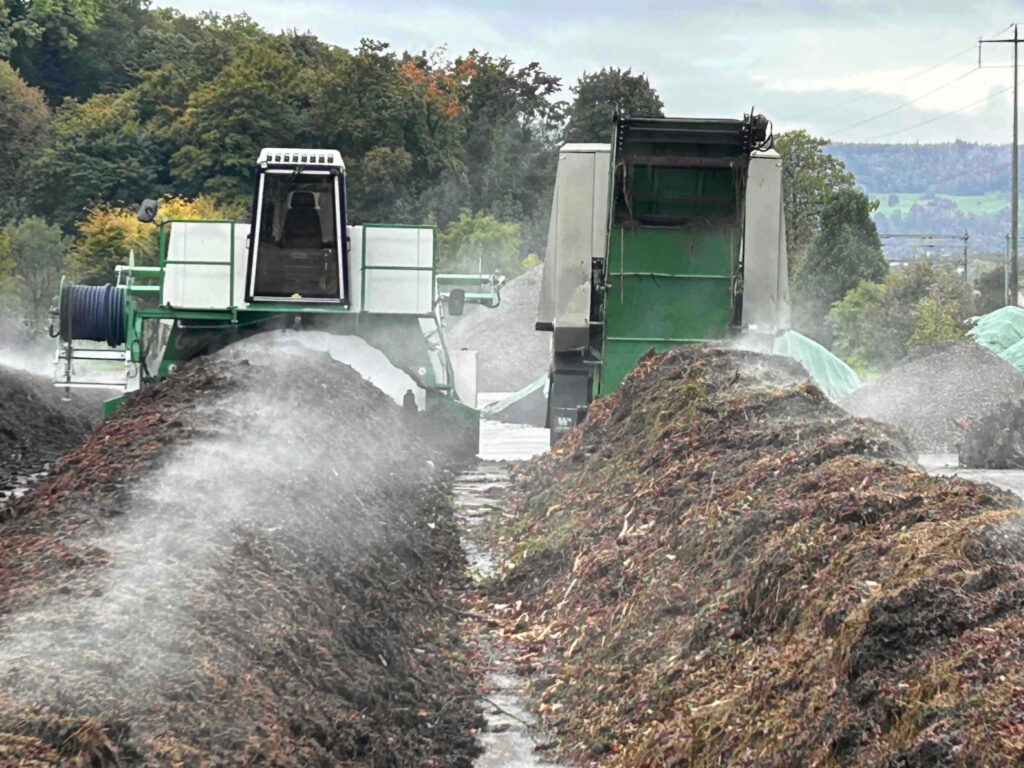
The municipal garden centre reports that almost 14,000 litres of this alternative have been used since the start of the «HVO pilot project» last July. The company decided in favour of HVO in Arlesheim because large machines with diesel engines are needed for composting there. ’There is no electric drive available for these in the near future,« says the media centre.
As part of the pilot test with HVO, the municipal garden centre wants to find a way to operate these machines «as ecologically as possible» from 2030 at the latest. In this way, the municipal nursery wants to harmonise the cantonal strategy «Climate-neutral administration by 2030» with the diesel vehicles that are still available and cannot be replaced.
In response to an enquiry, the JSD states that the use of alternative fuels is currently being «examined». Among other things, the JSD operates and maintains vehicles for the police, ambulance service, professional fire brigade and civil defence. According to a media spokesperson, a switch to HVO diesel would be «difficult» for various reasons.
According to JSD, some vehicle and engine manufacturers of the approximately 220 diesel vehicles would make warranty services dependent on the type of fuel - especially for older vehicles. If an engine running on HVO fuel stops working, this could invalidate the warranty.
The fire service and civil defence also fill generators with conventional diesel to produce electricity. «It makes the most sense in terms of operation, safety and cost efficiency if the same fuel is purchased and used for all diesel vehicles and engines,» says the media spokesperson.
Using different diesel fuels for different diesel engines would increase the «operational risk». Or to put it another way: in an emergency, the police, ambulance service or fire brigade cannot afford for a required vehicle to be unable to carry out its mission due to a fuel problem.
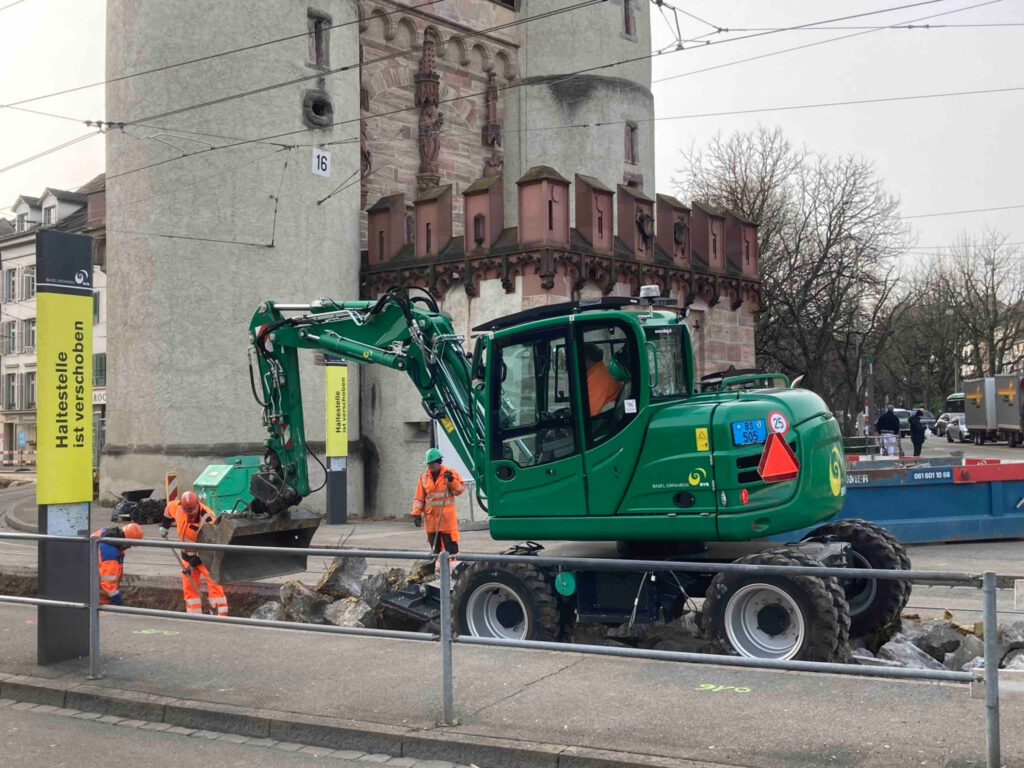
Finally, construction machinery at the Basler Verkehrsbetriebe (BVB) is refuelled with HVO fuel. Excavators and wheel loaders, for example. Unlike Stadtgärtnerei, BVB does not have its own in-house HVO refuelling stations, according to an enquiry.
According to BVB, the bus fleet, which currently consists of 54 diesel-powered articulated buses and five diesel-powered minibuses, cannot be fuelled with HVO fuels for guarantee reasons. «As we are only allowed to refuel our diesel buses with fuels that have been approved by the manufacturer for our vehicles, we do not use HVO fuel.»
For this reason, BVB is currently focussing on the electrification of the entire bus fleet. According to the Basel parliament, this must be implemented by next year.
How does the municipal nursery view the ecological footprint of the HVO fuel? «We cannot conclusively assess the carbon footprint. If we trust the certificates of the manufacturers and suppliers from whom we purchase the HVO fuel, we can assume significant savings in greenhouse gases compared to fossil diesel,» writes the media centre.
Prime News also confronts Thomas Scheurer with the statement that he could also be interested in selling additional HVO fuel to state-owned companies. The Managing Director of Gerspach AG replies: «No, that's not what I'm talking about. But the city nursery could use HVO to keep vehicles that have not yet reached the end of their service life running ecologically for longer. This would relieve the taxpayer and the machines could do their job for the rest of their lives with a clear conscience.»
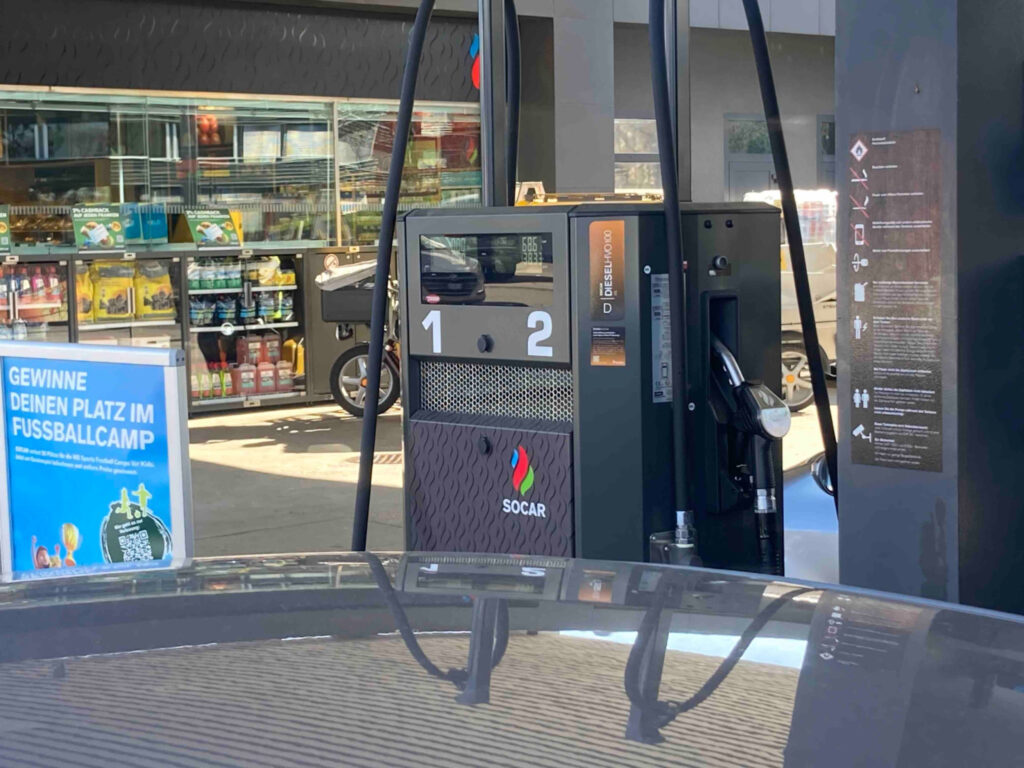
Private individuals in the region can also refuel cars with diesel engines with the HVO alternative. This is possible at the Socar petrol station in Muttenz. The price for a litre of HVO there was CHF 1.99 last Tuesday. This makes the alternative five centimes more expensive than a litre of conventional diesel at this time. According to Socar, the HVO product is made «exclusively from biogenic residual and waste materials».

Source cover picture: www.oest.de


Biofuels Switzerland
Association of the Swiss Biofuels Industry
Bahnhofstrasse 9
CH-4450 Sissach